


The History of Balers: A Revolution in Farming and Waste Management
The story of balers is a tale of innovation and efficiency in both agriculture and waste management. The inception of balers in the 1930s marked a significant turning point for farmers who had long struggled with the labor-intensive process of managing hay and other crops.
Before the advent of automatic balers, the agricultural landscape was a stark contrast to what it is today. Hay was cut by hand, a process that was both time-consuming and physically demanding. After cutting, farmers would gather the hay into haystacks using rakes and forks, a method that was not only inefficient but also posed challenges in maintaining the quality of the hay.
The Optimal Haystack Size: A Balancing Act
Farmers of the era had a keen understanding of the importance of the optimal haystack size. Haystacks that were too large risked internal heating, which could lead to spontaneous combustion-a hazard that could result in the loss of valuable crops and even pose a risk to human life. Conversely, haystacks that were too small were more susceptible to drying out and degrading, which could affect the nutritional value of the hay and its suitability for livestock feed.
The Introduction of Automatic Balers
The first automatic balers were a game-changer. In 1947, Allis Chalmers introduced the Roto-Baler, a round baler that revolutionized the way farmers handled hay. This machine could take freshly cut hay and compact it into round bales, making it easier to transport, store, and feed to livestock. The Roto-Baler not only saved time and labor but also helped to preserve the quality of the hay by controlling its size and environment.
Diversity in Baler Types
As the concept of balers took hold, other types emerged to cater to different agricultural needs. Rectangular balers and small square balers were developed, each with its own set of advantages. These balers were adapted for various crops, not just hay, and became an essential part of modern farming equipment.
The Allis Chalmers Roto-Baler: A Pioneer in Agricultural Machinery
The Roto-Baler was a marvel of its time. It was the first of its kind and set the stage for future developments in baler technology. Its design allowed for the efficient baling of hay, reducing waste and increasing productivity on farms across the country.
The Evolution of Scrap Material Balers
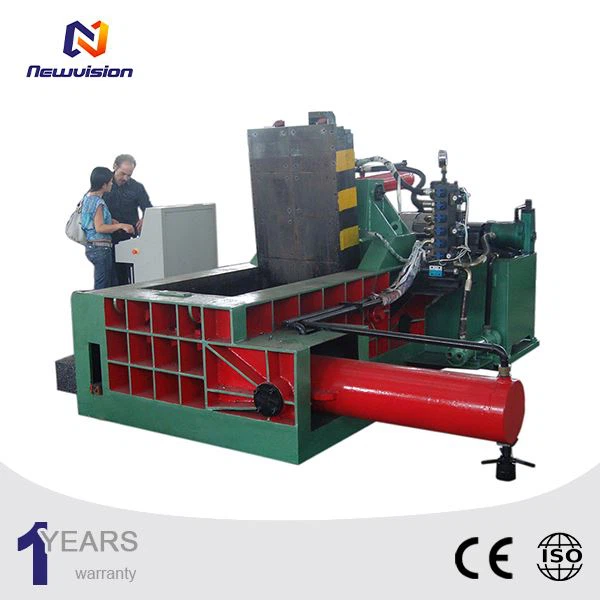
While balers were transforming agriculture, they were also being adapted for other uses. In 1941, MS Wells patented a compactor designed to compact oil cans, which can be seen as an early precursor to modern scrap material balers. These machines were initially designed to address the growing issue of waste materials, particularly in industrial settings.
By the 1970s, the concept of the compactor had evolved significantly. These machines were now being used to compact household waste by harnessing hydraulic pressure from water lines. This development marked the beginning of an era where balers and compactors became integral to waste management systems, not just in industrial settings but also in municipal waste handling.
In summary, the history of balers is a testament to human ingenuity and the constant drive to improve efficiency. From their origins in agriculture to their adaptation for waste management, balers have played a crucial role in shaping modern practices in both farming and environmental sustainability.