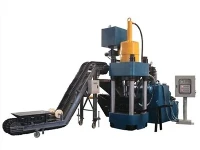

If you’ve ever walked through a scrap yard or a metal recycling facility, you’ve probably seen these big, heavy machines that turn messy, loose metal waste into neat, compact briquettes. Those machines are hydraulic metal briquetting machines, and if you’ve dug into how they work, you might be wondering why they rely so much on their hydraulic system. As someone who supplies these machines (and has talked to tons of recyclers and scrap dealers about their daily headaches), I’m here to break that down—no fancy engineering jargon, just real talk about what that hydraulic system actually does, and why it’s the unsung hero of the whole operation.
First off, let’s get one thing straight: a hydraulic metal briquetting machine isn’t some fancy magic box. It’s a beast built for force—lots and lots of it. The main job of the machine itself is to take random metal scraps (like aluminum chips from a machining shop, copper dross from smelting, or even tire wire that’s mixed with rubber and steel) and squeeze them into dense, briquettes that are easy to transport, store, and sell. Without the hydraulic system, though, that squeeze just wouldn’t happen—or at least not in a way that makes sense for a business.
Let’s start with the basic function of a hydraulic system in any machine, and then tailor it to briquetting. Hydraulics work on Pascal’s Principle, right? Basically, if you apply pressure to a small amount of fluid in a closed system, that pressure gets transferred evenly (and amplified) to a larger area. So instead of using a bunch of mechanical gears or levers that would be huge, clunky, and wear out fast, hydraulics let you generate massive force with a compact setup. For a briquetting machine, that force is everything. Imagine trying to squeeze a pile of aluminum chips into a brick with your hands—you’d get a tiny, crumbly mess. But with a hydraulic system, you can generate 100 tons or more of pressure, turning those loose chips into a solid, palm-sized block that’s 60-80% dense. That’s the game-changer.
Now, let’s get specific to the metal briquetting world, because not all hydraulic systems are made the same. Let’s take the most common materials recyclers work with: aluminum. A lot of my customers are machining shops that generate tons of aluminum chips every month—those thin, curly shavings that take up so much space in a bin, are hard to ship, and barely sell for anything. I’ve seen one of these shops pay hundreds extra in monthly shipping because their chips take up half the truck, but when they add a hydraulic briquetting machine, the same amount of chips becomes one-third the volume. The hydraulic system here controls the main press ram—the part that actually squeezes the chips. It moves smoothly, applies consistent pressure, and can be adjusted depending on the material. For example, if you’re working with aluminum chips, you might set the hydraulic system to a lower pressure than you would for a denser material like copper dross. That’s why our Aluminum Chip Briquetting Machine customers tell us the hydraulic system is the reason their briquettes never crumble—if the pressure was inconsistent, half the briquettes would fall apart before they even leave the shop.
Another big part of the hydraulic system is the control system. You might think a hydraulic system is just a pump and some fluid, but modern machines use hydraulic controls to make the whole process automated. I’ve had customers who run their machines 12 hours a day, 5 days a week, and they don’t have to stand there holding a lever the whole time. The hydraulic system works with electronic controls to regulate the speed of the press, the amount of pressure applied, and even the ejection of the finished briquette. That’s a huge deal for small business owners who don’t have a team of operators—they can load the material, push a button, and the machine does the rest. No guesswork, no missed pressure points, no wasted time.
Wait, let’s talk about durability too. Metal briquetting is tough work—those machines are running 8 hours a day, squeezing hard materials, dealing with wear and tear. A hydraulic system, when built right, is way more durable than mechanical systems would be for this kind of heavy load. I’ve seen cheap briquetting machines that use mechanical presses break down in a year because the gears and rods can’t handle the constant force. Our machines, though, use high-quality hydraulic components, and most of the breakdowns I’ve heard from customers are minor issues with the fluid (which is easy to fix, by the way). For example, some guys will skip changing the hydraulic fluid regularly, and that causes the system to lose pressure. It’s a simple maintenance thing, but it shows how important the hydraulic system is to the machine’s overall lifespan.
Let’s dive into a specific material to make this real. Copper dross is a messy byproduct of copper smelting—It’s that crumbly, oxidized stuff that’s hard to handle, and recycling it is a pain because it’s so lightweight. Our Copper Dross Press Machine uses a hydraulic system that’s designed to handle the higher density requirements of copper. The hydraulic ram applies 150+ tons of pressure, which compresses the copper dross into a dense briquette that’s perfect for selling back to smelters. I had a customer last year who was sending his copper dross to a landfill because he couldn’t figure out how to compact it. After he got our machine, he told me the hydraulic system was exactly what he needed—his briquettes were so dense, the smelter paid him 20% more than he was getting for loose dross. That’s the kind of win I talk about when I explain why the hydraulic system isn’t just a part—it’s the reason the machine works for the business.
Another example: tire wire. When you scrap old tires, you have to separate the steel wire from the rubber, and that wire is a valuable metal, but it’s thin, tangled, and takes up a lot of space. Our Tire Wire Briquetting Compactor Machine uses a hydraulic system that’s adjusted for the shape and texture of tire wire. The hydraulic press has a special die that’s shaped to hold the tangled wire, and the system applies enough force to compact it into a solid briquette that’s easy to transport and sell. I talked to a guy who works in tire recycling, and he said before he had the machine, he was paying to have the wire hauled away. Now, with the help of the hydraulic system, he sells the briquettes for extra cash. He even told me that if the hydraulic system was weaker, the wire would just spring back and never form a solid block. That’s a perfect example of the hydraulic system’s role—it’s not just about force, it’s about controlling that force to work with the specific material.
Now, let’s address the difference between new and used machines, because I get asked about that all the time. A lot of small businesses don’t want to drop a ton of money on a new machine, so they look at used options. When they ask me about used machines, the first thing I tell them to check is the hydraulic system. If the hydraulic system is in good shape (meaning no leaks, the pressure is consistent, the fluid is clean), then a used machine can be a great deal. But if the hydraulic system is worn out, even a cheap used machine will end up costing you more in repairs than a new one. That’s why our team often points customers to our Used Aluminum Briquetting Machine or Used Vertical Copper Briquetting Press Machine options—we make sure to inspect the hydraulic system thoroughly before putting used machines up for sale, so our customers don’t get stuck with a lemon.


Wait, what about common misconceptions? Some people think the hydraulic system is just there to push the ram, but it does way more. Let’s think about the cycle of a briquetting machine: you load material into the die, the ram moves forward to squeeze, holds the pressure for a few seconds (that’s important—if you release pressure too fast, the briquette might fall apart), then the ram retracts, and the ejector pushes the finished briquette out. Every single step of that cycle is controlled by the hydraulic system. The speed of the ram moving forward, how long it holds the pressure, the force of the ejector—all of that is hydraulic. Without that precise control, the briquettes would be inconsistent, which means you can’t sell them for a good price. Buyers want uniform, dense briquettes, and that uniform is all because the hydraulic system works the same way every time.
I also want to talk about efficiency, because that’s a big one for any business. A well-tuned hydraulic system uses less energy than you’d think, especially compared to doing all that work manually. I’ve had customers who upgraded from old, manual briquetting machines to hydraulic ones, and they noticed a drop in their electricity bills because the hydraulic system is optimized to only use energy when it needs to. Plus, the automation that comes with modern hydraulic systems means you don’t need as much labor—one person can run the machine by themselves, instead of two or three guys working to squeeze material by hand. That adds up to more profit, which is why so many scrap dealers are switching to hydraulic metal briquetting machines.
Now, let’s get into some real-world maintenance tips, because I don’t want this to just be theory. The hydraulic system is super reliable, but it does need a little care to keep working right. First, change the hydraulic fluid regularly—most manufacturers recommend every 2000 hours of operation, or once a year, whichever comes first. If you skip this, the fluid gets dirty, which can clog the system and cause pressure drops. Second, check for leaks regularly—even a small leak can lead to lost pressure and inefficient operation. Third, use the right type of hydraulic fluid for your machine—using the wrong fluid can damage the seals and reduce performance. I always tell customers that taking care of the hydraulic system will make the whole machine last 5-10 years, which is a great return on investment.
Let me circle back to why this matters for you, the person reading this. If you’re a scrap dealer, a recycling facility, or a machining shop that generates metal waste, the hydraulic system is the heart of your briquetting operation. It’s not just a part—it’s what turns your messy, low-value waste into compact, high-value briquettes that you can sell. I’ve seen customers turn $500 a month in shipping and landfill costs into $2000 a month in extra revenue, all because of a well-functioning hydraulic system. That’s the difference between a machine that’s just a hunk of metal and a machine that makes you money.
If you’re thinking about getting a hydraulic metal briquetting machine, or if you already have one and want to make sure it’s working at peak performance, feel free to reach out. I’ve worked with hundreds of customers across different industries, and I can help you find the right machine for your specific needs—whether that’s a new Aluminum Chip Briquetting Machine, a Copper Dross Press Machine, a Tire Wire Briquetting Compactor Machine, or even a used option like the Used Aluminum Briquetting Machine or Used Vertical Copper Briquetting Press Machine. We don’t do high-pressure sales, and we’ll be honest with you about what kind of machine will work for your budget and your material.
At the end of the day, the hydraulic system is the unsung hero of the hydraulic metal briquetting machine. It generates the massive force needed to compact metal waste, controls the precise cycles that make consistent briquettes, and keeps the machine running efficiently for years. Without a good hydraulic system, a briquetting machine is just a big paperweight. But with a well-built hydraulic system, it’s a tool that saves you money, makes you money, and solves the headaches of handling loose metal waste. Whether you’re a small shop just starting out or a large recycling facility looking to upgrade, paying attention to the hydraulic system will make all the difference in your operation.
References:
- Hydraulic Systems for Industrial Machinery: Design and Applications, McGraw-Hill, 2021.
- Metal Recycling Technologies: A Guide to Efficient Operations, European Metal Recycling Association, 2022.
- Principles of Hydraulics for Manufacturing, Industrial Press Inc., 2020.
- Industrial Hydraulic Presses: Maintenance and Performance Optimization, Journal of Manufacturing Processes, Volume 56, 2023.
- Scrap Metal Briquetting: Best Practices for Densification and Marketability, Institute of Scrap Recycling Industries, 2021.