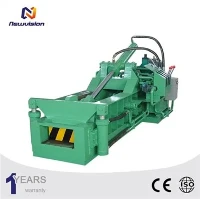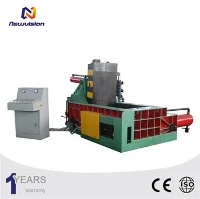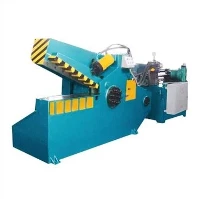

If you’ve ever had to coordinate a new industrial machine on your shop floor—whether you’re updating your metal processing line or adding capacity for scrap metal handling—you know how tricky it is to get the dimensions right. As a supplier of steel pipe shearing machines, I’ve spent countless walkthroughs with clients, helping them avoid the chaos of ordering a machine that’s too big to fit through a door, or so small it gets in the way of their forklift routes. Today, I’m breaking down the installation dimensions for these machines, the tiny details that don’t make it into marketing specs, and what you actually need to plan for before your new gear shows up.
First off, let’s cut to the chase: steel pipe shearing machines aren’t one-size-fits-all. Their installation dimensions depend on a few key factors—what size pipes you’re cutting, whether it’s standalone or paired with other equipment, and how you’ll load/unload materials. The last thing any shop wants is to uncrated a machine, only to realize it’s 2 feet wider than the space allocated. I’ve seen it happen: a small fabrication shop tried to squeeze a 12-inch capacity shearing machine into a 10-foot-wide bay, and they had to move three storage bins and re-route their air hose at 7 PM on a Friday. Not ideal.
Let’s start with the core machine dimensions, because that’s the base of everything. Most standard steel pipe shearing machines we supply have a footprints that range from, well, small to pretty large. For light-duty models (good for pipes under 4 inches in diameter, common for small workshops), the main unit is usually 4 to 5 feet long, 2 to 3 feet wide, and about 3.5 feet tall. That’s manageable, right? But wait—you don’t count just the machine itself. You need space for the feed and exit lanes, because you don’t want pipes sliding off the table mid-cut. For these light-duty setups, we recommend adding at least 6 feet of clear space in front (where you load the pipes) and 4 feet behind (where the cut pieces land). That gives your operator room to maneuver, no narrow tight spots.
Now, if you’re going for medium to heavy-duty machines—say, cutting pipes up to 12 inches, which is common in construction or scrap yards—those dimensions get bigger. The main machine here is typically 7 to 9 feet long, 4 to 5 feet wide, and 4 to 5 feet tall. Suddenly, that footprint jumps. The feed lane for these models needs 8 to 10 feet of clear space, because you’re feeding longer pipes (some come in 20-foot sticks, by the way—pro tip: if you’re cutting full-length pipes, plan for even more space). And behind the machine, you need at least 5 to 6 feet of exit space for cut pieces, especially if you’re piling them up or moving them with a forklift. Heavy-duty shears also have a power unit—usually a hydraulic pump—and that can add a few inches to the height, so don’t forget to check your ceiling clearance. I once worked with a scrap yard in Houston that had a 10-foot ceiling, and their 5.2-foot-tall shearing machine left just 6 inches of clearance between the top of the unit and the ceiling duct. Every time they ran the machine, they were nervous it would snag.
Wait, there’s also the question of power and utility connections. That’s a hidden dimension most people don’t think about until the electrician shows up. Steel pipe shearing machines run on electricity, usually 3-phase power, but some heavy-duty models need a dedicated circuit. On the machine, the power inlet is typically on the side or back, 1 to 2 feet from the floor. So you need a clear path from the electrical panel to that inlet, and space for an electrician to work—maybe a foot of extra space on the side where the connections are. We always tell clients to have a licensed electrician scope that spot before delivery; don’t wait until the machine is in place to run new wiring.
Another thing: floor space and load capacity. These machines are heavy. Even the light-duty models weigh around 1,500 pounds, and the heavy ones? Up to 10,000 pounds. That means your floor needs to support that weight. You don’t want a concrete slab that’s just enough for regular equipment to crack under a 10,000-pound machine. Most industrial shops have concrete floors rated for at least 2,000 pounds per square foot, but if your floor is older or thinner (less than 6 inches), you might need to add a reinforcement slab or use steel plates under the machine’s feet. I’ve had clients skip this, and after a few months, their machine was leaning slightly, which messed up the cut precision. Fixing that later costs way more than planning for it upfront.


Now, let’s talk about related gear because a steel pipe shearing machine rarely works alone. A lot of shops pair them with other metal processing tools, like a metal cutting band saw or a alligator scrap metal cut machine, wait— actually, no, maybe a cutting machine for metal that handles smaller scraps, or a metal cutting shears machine for excess metal. If you’re setting up a whole line, you need to make sure all these machines fit together without cramping each other. For example, if you’re feeding pipes from a band saw into the shearing machine, the space between them needs to align—no awkward angles that make it hard to move pipes between them. Some clients also add a conveyor for scrap, so you need space for that too, usually 3 to 4 feet next to the main machine.
Wait, let’s get specific on common mistakes I see. Last year, a construction supply company ordered a heavy-duty steel pipe shearing machine, and they measured just the machine’s width, not including the control panel. The control panel sticks out 6 inches on one side, and their bay was exactly the machine’s width—so they had to move a stack of rebar that was right next to the spot. It delayed their setup by 3 days, which cost them a job because they couldn’t get the machine running in time. Lesson: measure every protruding part, not just the main body. Control panels, power cords (wait, no, the power cord is short, but the hydraulic hoses—some machines have hoses that stick out a few inches), even the foot pedals—if you have a foot-operated control, you need a few extra inches in front for the operator’s feet.
Also, consider access for maintenance. These machines need regular oil changes, blade sharpening, and filter replacements. You need at least 2 to 3 feet of clear space on one side of the machine so a technician can open the side panels and work. If you cram the machine tight to the wall, you’ll have to move it every time you do maintenance, which is a pain and can damage the machine’s alignment. I always tell clients to pick a spot that has at least 2 feet of open space on two sides—front (for loading) and one side (for maintenance) is the minimum.
Let’s summarize the key installation dimensions by machine type, because that’s what most people actually want. For light-duty steel pipe shearing machines (cutting pipes up to 4 inches, 1,500–2,500 lbs):
- Main machine: 4–5 ft L x 2–3 ft W x 3.5 ft H
- Clearance needed: 6 ft front (loading), 4 ft back (exit), 1 ft side for power, 2 ft side for maintenance
- Total required floor space (minimum): 10 ft L x 5 ft W
For medium-duty (4–8 inch pipe, 3,000–5,000 lbs):
- Main machine: 6–7 ft L x 3–4 ft W x 4 ft H
- Clearance needed: 8 ft front, 5 ft back, 1.5 ft side for power, 2.5 ft side for maintenance
- Total floor space: 13 ft L x 6 ft W
For heavy-duty (8–12 inch pipe, 6,000–10,000 lbs):
- Main machine: 8–9 ft L x 4–5 ft W x 5 ft H
- Clearance needed: 10 ft front, 6 ft back, 2 ft side for power, 3 ft side for maintenance
- Total floor space: 16 ft L x 7 ft W
And don’t forget the ceiling height! All these models need a minimum ceiling clearance of 7 feet—some heavy-duty ones need 7.5 feet, just to be safe. If your shop has low ceilings, we have compact heavy-duty models that are 4.5 feet tall instead of 5, but you have to check with us because they have slight capacity limits.
Wait, let’s touch on scrap handling too, because that’s a big part of why people buy these machines. If you’re cutting pipes, you’re going to have offcuts and scraps, so a lot of clients get an alligator scrap shearing machine to process those small scraps into uniform pieces for recycling. If you’re setting up both, you need to space them apart so you have room to move scrap between them. Same goes for a crocodile scissors shearing machine for even smaller debris—don’t stack these machines too tight. I once worked with a client who put an alligator scrap metal cut machine right next to their steel pipe shearing machine, and the forklift couldn’t get between them to move full pipe loads. We had to rearrange, and it took half a day, but it was way better than dealing with that every day.
Another random but important detail: door clearance. When your machine is delivered, it comes on a pallet, sometimes with crating. So not only does the spot need to fit the machine, but the door (or loading dock) needs to fit the crated machine. For most light-duty machines, the crated unit is 5 feet long, 3 feet wide, so a 6-foot-wide door is enough. Heavy-duty crated units can be up to 10 feet long, so you need a door that’s at least 10 feet wide, or a loading dock that can lift it in. We always send a crated dimension sheet with every order, but I’d suggest laying that over your door frame before the delivery date to double-check.
Let’s get back to basics: why do installation dimensions matter so much? It’s not just about fitting a machine. A poorly placed machine can hurt productivity—if you have to wait for space to move pipes, your throughput goes down. It can also damage the machine over time—if it’s on an uneven floor or crammed tight, parts wear out faster. And let’s be real, moving a machine after delivery is expensive. We’ve seen clients pay $2,000 just to move a heavy-duty machine a few feet because they didn’t measure right. That’s money you could have used for training or extra blades.
Now, if you’re in the market for a steel pipe shearing machine, here’s my advice: don’t just look at the specs sheet. Ask us for the exact dimensions (main unit, control panel, protrusions) of the model you’re considering. Measure your shop floor, leave extra space for loading, unloading, maintenance, and related gear. If you’re working with a limited space, tell us—we can adjust some models to be more compact. And if you’re pairing it with other tools, like a cutting machine for metal or a metal cutting shears machine, let us know, and we’ll help you map out the layout so everything flows.
At the end of the day, installation dimensions aren’t just numbers on a page. They’re the difference between a machine that works for you, and a machine that’s a headache. I’ve been in this game long enough to know that taking 30 extra minutes to measure right before ordering saves weeks of frustration later. If you’re ready to talk about your specific setup—whether it’s light-duty pipe cutting, heavy scrap processing, or something in between—reach out to us. We’ll walk through your space, answer all your dimension questions, and make sure your new machine fits like a glove.
Before I wrap up, a quick note on accuracy: these dimensions are standard for most models we supply, but they can vary a tiny bit between brands or custom builds. Always confirm with your supplier, and if you have any weird space constraints, mention them early. We’ve customized setups for clients with low ceilings, narrow bays, and even outdoor processing areas (though we recommend covering outdoor machines). No job is too specific, and no dimension is too small to overcheck.
References
- Industrial Machinery Installation Guide, Metal Processing Equipment Association, 2022
- Hydraulic Shearing Machine Dimension Standards, AB Industrial Equipment Technical Manual, 2023
- Shop Floor Layout Best Practices, National Association of Fabricators, 2021