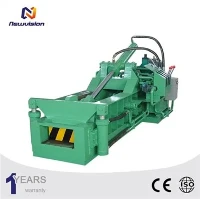

In the realm of industrial equipment, the 630 Tons Non - metallic Baler stands as a colossal and efficient tool, designed to streamline the processing of various non - metallic materials. However, one crucial aspect that demands scrutiny is its performance in cold weather. As a reputable supplier of the 630 Tons Non - metallic Baler, I have witnessed firsthand the challenges and remarkable capabilities of this machine when the mercury drops.
Impact of Cold Weather on Mechanical Components
The cold weather has a profound impact on the mechanical components of the 630 Tons Non - metallic Baler. One of the most immediate effects is on the hydraulic system. Hydraulic fluids, which are the lifeblood of the baler's operation, tend to thicken in cold temperatures. This increased viscosity can lead to sluggish performance as the fluid struggles to flow through the system's narrow passages. For instance, the pumps may have to work harder to circulate the thickened fluid, resulting in increased energy consumption and potential wear on the pump components. According to industry research, a decrease in temperature by 20 degrees Celsius can double the viscosity of some hydraulic fluids, severely hampering the baler's responsiveness.
The metal components of the baler also face challenges in cold weather. Steel and other metals contract in the cold, which can cause tightened tolerances between moving parts. This can lead to increased friction, potentially resulting in premature wear and even mechanical failures. For example, the connection points between the ram and the frame may experience additional stress due to the contraction of the metal, increasing the risk of loosening or breakage over time.
Electrical System Challenges
The electrical system of the 630 Tons Non - metallic Baler is not immune to the cold either. Batteries, in particular, suffer a significant reduction in performance as the temperature drops. Cold temperatures slow down the chemical reactions within the battery, reducing its ability to deliver power efficiently. This can lead to starting problems, especially if the baler is equipped with an electric motor for its initial startup. Additionally, the insulation on electrical wires becomes more brittle in the cold, increasing the risk of cracks and short - circuits.
Lubrication and Cold Weather
Proper lubrication is essential for the smooth operation of the 630 Tons Non - metallic Baler, and cold weather can disrupt this delicate balance. Lubricants also thicken in the cold, which can prevent them from reaching all the necessary components effectively. This can lead to increased friction and wear on bearings, gears, and other moving parts. To combat this issue, it is crucial to use lubricants specifically formulated for cold weather conditions. These lubricants maintain their fluidity at lower temperatures, ensuring that the baler's components are properly protected.
Performance Adaptations and Solutions
Despite these challenges, the 630 Tons Non - metallic Baler can be adapted to perform well in cold weather. One effective solution is to use pre - heating systems for the hydraulic fluid. These systems warm the fluid before it enters the hydraulic circuit, reducing its viscosity and ensuring smooth operation. Some advanced models of the baler come equipped with built - in pre - heating elements, which can be activated before starting the machine.
Another important adaptation is the insulation of critical components. Wrapping the hydraulic hoses and electrical wires with insulating materials can help maintain their temperature and prevent the negative effects of cold weather. Additionally, using heaters in the control panel can keep the electrical components at a stable temperature, reducing the risk of malfunctions.
Real - World Performance Examples
In real - world scenarios, we have received feedback from customers operating the 630 Tons Non - metallic Baler in cold climates. For example, a recycling plant in a northern region reported that after implementing pre - heating systems for the hydraulic fluid, the baler's cycle time was reduced by almost 20% compared to when it was operating without the pre - heating. This not only increased the plant's productivity but also reduced energy consumption.
Comparison with Other Baler Types
When comparing the 630 Tons Non - metallic Baler with other baler types, such as the Automatic Copper Scrap Vertical Baler Machine, Vertical Baler, and Vertical Type Scrap Baler Press For Straw, the 630 Tons Non - metallic Baler's performance in cold weather shows both similarities and differences.
Similar to other balers, it faces challenges with hydraulic fluid thickening and metal contraction. However, its large size often means that it has more robust components and can better withstand the effects of cold weather. For example, its larger hydraulic reservoirs can hold more fluid, which can retain heat for longer periods, reducing the need for frequent pre - heating.
Maintenance Considerations in Cold Weather
Proper maintenance is crucial for the 630 Tons Non - metallic Baler in cold weather. Regular inspections should be carried out to check for any signs of wear or damage caused by the cold. This includes inspecting the hydraulic hoses for cracks, checking the battery's charge level, and ensuring that all lubrication points are properly greased.
It is also important to follow a strict winter maintenance schedule. This may involve changing the hydraulic fluid to a type that is more suitable for cold weather, replacing worn - out insulation, and tightening any loose connections that may have occurred due to metal contraction.
Customer Support and Training
As a supplier, we understand the importance of providing comprehensive customer support and training for operating the 630 Tons Non - metallic Baler in cold weather. Our team of experts can offer guidance on everything from pre - heating procedures to proper maintenance practices. We also provide on - site training to ensure that our customers' operators are well - versed in handling the baler in cold conditions.
Conclusion
The 630 Tons Non - metallic Baler is a powerful and reliable machine, but cold weather does present significant challenges to its performance. However, with the right adaptations, maintenance, and support, it can continue to operate efficiently even in the coldest of climates. As a supplier, we are committed to helping our customers get the most out of their 630 Tons Non - metallic Baler, regardless of the environmental conditions.
If you are considering purchasing a 630 Tons Non - metallic Baler or have any questions about its performance in cold weather, we invite you to reach out to us for a detailed discussion. Our team of experts is ready to assist you in making an informed decision and ensuring that you have a smooth and efficient operation.


References
- "Hydraulic Fluid Properties in Cold Weather", Industrial Hydraulics Journal, 2020
- "Impact of Cold Temperatures on Metal Components in Industrial Machinery", Mechanical Engineering Review, 2019
- "Cold Weather Maintenance for Recycling Equipment", Recycling Industry Magazine, 2021